Trump's New Tariffs Test the Limits of Presidential Power
On Friday 24 July, President Trump imposed a new round of tariffs of 10–12% on imports from more than 80 countries. The move follows a February Supreme Court ruling that he had acted unlawfully by introducing previous tariffs without congressional approval. In response, Mr Trump enacted a temporary 150-day global tariff, which expired on 24 July, prompting this latest package. The new measures rely on Section 301 of the Trade Act 1974, which allows the president to impose tariffs without congressional approval if the US Trade Representative finds unfair labour practices affecting American commerce following an investigation. The tariffs, affecting major trading partners including the UK, Canada, Mexico and India, are likely to face legal challenges. According to the US Trade Representative, each country was assessed on whether it was doing enough to prevent imports produced with forced labour from entering the US. With American consumers expected to bear nearly 90% of the cost, the political consequences may become clearer by November's midterm elections.
Andy Burnham's New Cabinet: Familiar Faces, New Roles
Burnham’s reshuffle marks a clear departure from Keir Starmer’s government, with several senior figures moved or replaced. John Healey, who previously served as Defence Secretary, replaces Rachel Reeves as Chancellor, signalling a potential shift towards Burnham’s pledge to “reindustrialise Britain” and prioritise economic growth. Ed Miliband moves from Energy Secretary to Foreign Secretary, while Yvette Cooper swaps the Home Office for Health, bringing continuity but a change in focus at one of Labour’s most politically sensitive departments. Wes Streeting replaces Healey as Defence Secretary, while Angela Rayner returns to the front bench as Housing Secretary. Burnham has also promoted newer figures, including Miatta Fahnbulleh as Energy Secretary and Kanishka Narayan as the first AI Minister. The reshuffle suggests a government seeking to balance familiar Labour figures with a renewed emphasis on industry, housing and technological growth.
Wildfires force hundreds of thousands to evacuate across France and Spain
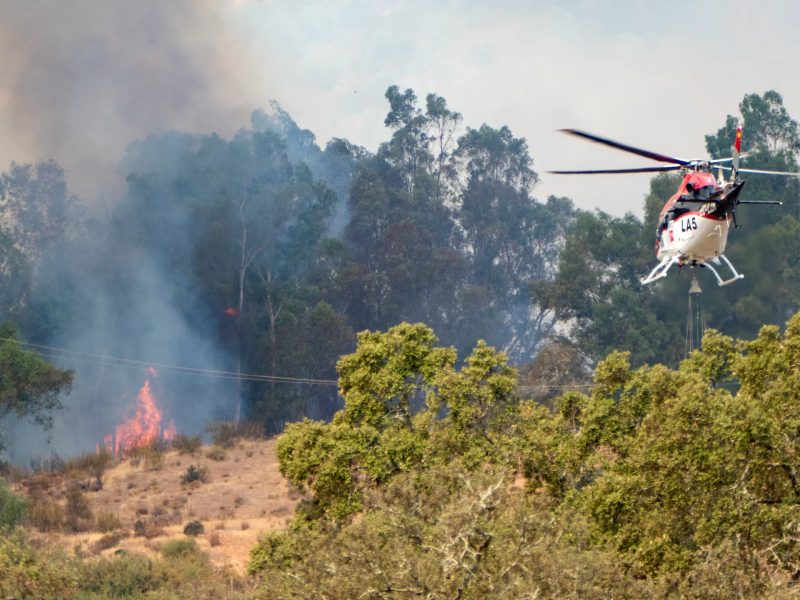
300,000 people have fled their homes as near “uncontrollable” wildfires sweep across France and Spain, triggering one of the largest peacetime evacuation operations in France’s history. The fires come after weeks of extreme heat and drought left forests dangerously dry, allowing flames to spread rapidly across southern Europe. In France, the worst affected area has been Gironde in the south-west, where a major blaze has devastated thousands of hectares of forest and forced thousands of residents and tourists to evacuate. Spain has also faced multiple separate fires across the country, with emergency services battling to contain the flames amid high temperatures and strong winds. The fires highlight the growing challenge for European governments as climate change increases the frequency and severity of extreme weather events, putting pressure on emergency services and forcing difficult questions over wildfire prevention and land management.
Add comment
Comments